
Tip & Trick
Did you know your keyboard hides powerful symbols starting with 'A' that can boost productivity and streamline workflows? These 10 underused symbols—from advanced formatting to niche programming—will transform how you interact with text, code, and documents daily.
Accented Characters for Global Text
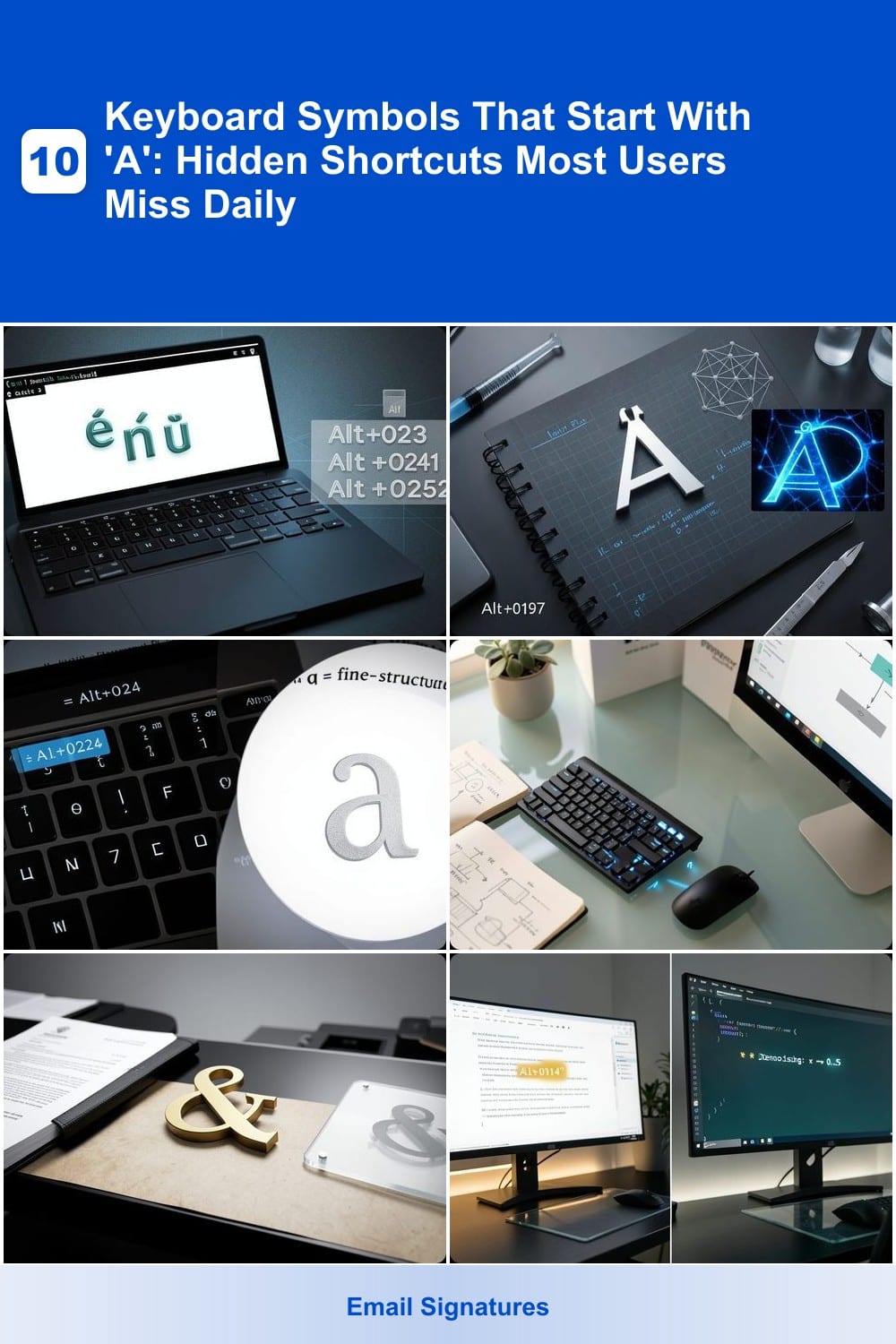
Struggling to type é, ñ, or ü without switching keyboards? These accented characters are just a few keystrokes away on Windows/Linux using Alt codes (e.g., Alt+0233 for é). Perfect for Spanish, French, German, or multilingual documents, they eliminate the need for language-specific layouts.
Type Alt+0233 for é, Alt+0241 for ñ, or Alt+0252 for ü—no extra software required. These shortcuts work in Word, Notepad, or coding files (e.g., café in Python strings). For macOS users, use Option+E for é or Option+N for ñ instead.
Ideal for writers, translators, and developers working with international text. Save these codes to speed up your workflow and avoid font substitution errors. ✨
Angstrom Symbol in Technical Writing
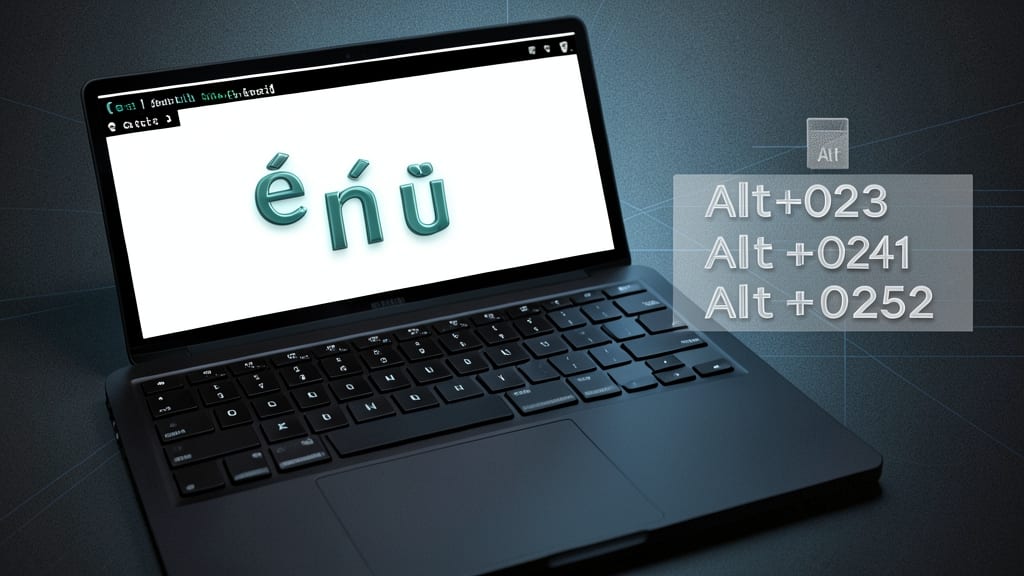
Precision matters in scientific writing—and the Ångström symbol (Å, Alt+0197) is your secret weapon for exact measurements. Whether you're documenting nanoscale experiments or drafting engineering specs, this symbol represents 0.1 nanometers, the standard unit for atomic-level distances. Unlike generic "a" or "A," it ensures clarity in fields where even a fraction of a nanometer can change outcomes.
Most keyboards hide this symbol in the Alt-code menu, but once mastered, it becomes indispensable. For example, a semiconductor datasheet might list "500Å gate length" instead of "0.05µm"—the Ångström version is instantly recognizable to engineers. It also appears in X-ray crystallography reports and material science papers, where precision trumps ambiguity.
If you work with lab reports, blueprints, or technical manuals, this symbol saves time and reduces errors. No more explaining units in parentheses—just type Å and let the context speak for itself. ✨
Alpha Symbol for Mathematical Equations
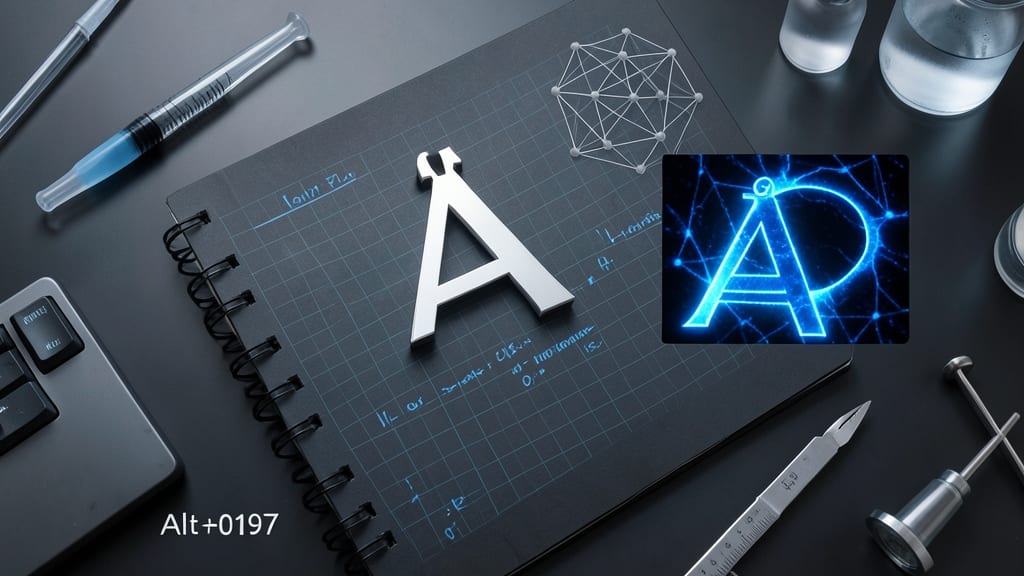
Struggling to type α (alpha) in your equations without switching fonts? The Alt+0224 shortcut lets you insert the Greek alphabet’s α instantly—no font hunting required.
This symbol isn’t just for math; it’s the standard variable in physics (e.g., α = fine-structure constant) and statistics (e.g., α = significance level). Typing it directly ensures consistency across documents and avoids rendering issues in LaTeX or Word.
Perfect for students, engineers, and data scientists who need precise notation without formatting headaches. ⚡
Arrow Symbols for Flowcharts and Diagrams

Tired of scrolling through endless symbol libraries just to add a simple arrow to your diagrams? The ← (left arrow) and → (right arrow) symbols—accessible via Alt+24 and Alt+25—are your secret weapon for creating flowcharts in PowerPoint, Visio, or even hand-drawn diagrams without leaving your keyboard.
These Unicode arrows are crisp, professional, and instantly recognizable, saving you time compared to inserting them from symbol menus. They’re perfect for process flows, user journeys, or decision trees, where direction matters. Plus, they’re font-independent, so your diagrams stay consistent across devices.
Whether you're a project manager mapping workflows or a student organizing notes, these shortcuts cut down on clutter and keep your diagrams clean. ⚡
Ampersand for Legal and Branding Documents

Legal documents and branding guidelines rely on the ampersand (&) more than you might think—but typing it correctly can be tricky. Unlike other symbols, the ampersand isn’t just a placeholder; it’s a formal, legally recognized character that ensures consistency across contracts and corporate identities.
Use Alt+0146 (Windows) or Option+Shift+7 (Mac) to insert the proper ampersand, avoiding font substitution issues that can arise with manual typing. This ensures your branding assets and legal agreements render identically across devices and platforms, preserving professionalism and compliance.
Perfect for lawyers, marketers, and designers, this symbol guarantees your documents look polished and authoritative—no matter where they’re viewed. ✨
Asterisk for Footnotes and Coding
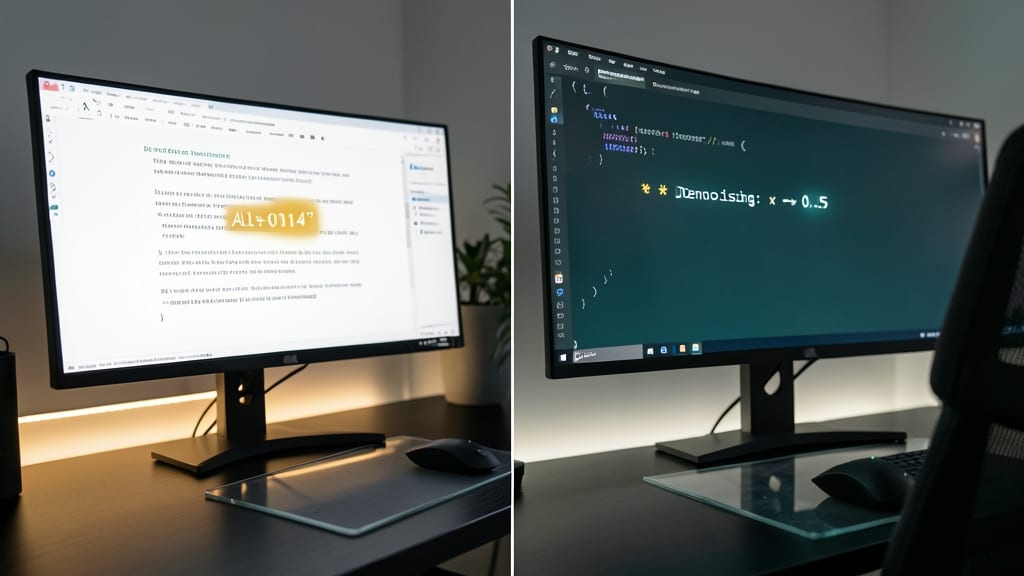
The asterisk () isn’t just for bullet points—it’s a dual-purpose powerhouse for writers and developers alike. In Microsoft Word, pressing Alt+0147 inserts a footnote marker, letting you reference sources without breaking your document’s flow. Meanwhile, Python developers use the same symbol to denote optional parameters in function definitions, making your code cleaner and more flexible.
For academic writers, the asterisk streamlines citations with zero formatting hassles, while developers leverage it to create default arguments like this: def greet(name, , formal=False). This subtle syntax change clarifies intent without cluttering your function signature. The same shortcut works across Windows and Linux, ensuring consistency whether you’re drafting a thesis or debugging a script.
Perfect for students juggling research papers and side projects, or developers maintaining legacy codebases. Master this one symbol, and you’ll save hours across both disciplines. ✨
At Symbol for Email and Programming

Tired of manually typing the same email address or Python decorator every time? The @ symbol (Alt+064) is your secret weapon—it’s the foundation of email addresses and a game-changer in scripting.
In emails, it’s the glue between usernames and domains (e.g., user@domain.com), while in Python, it’s used for decorators (e.g., @staticmethod) to modify function behavior without rewriting code. Typing it directly via Alt+064 saves time and avoids typos in bulk operations or repetitive tasks.
Developers and email marketers will love this shortcut—it’s the fastest way to insert @ in scripts, bulk emails, or even social media handles. ⚡
Acute Accent for Language-Specific Formatting
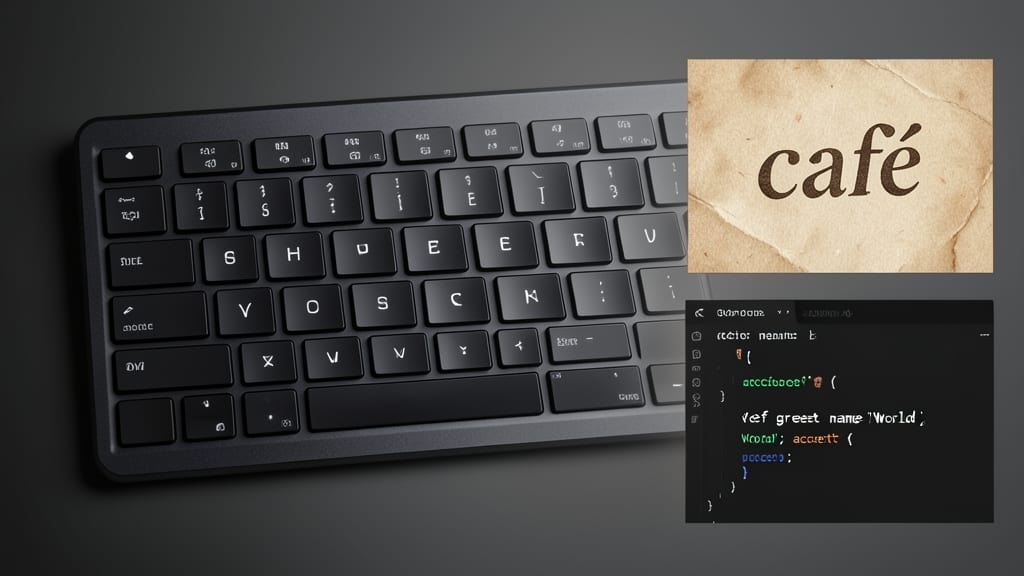
Need to distinguish between "café" and "cafe" or mark optional Python parameters? The acute accent (´)—accessible via Alt+0225—is a dual-purpose powerhouse for linguists and coders.
In Spanish and French, it transforms words like "cafe" into café (with proper pronunciation). For developers, it modifies variable names (e.g., var_´) or denotes optional arguments in some languages. Typing it directly avoids font substitution issues and ensures accuracy in both academic and technical documents.
Perfect for translators, developers working with multilingual systems, or anyone drafting precise documentation. Master this one to bridge language and code seamlessly. ✨
Arrowhead Symbols for UI Designers

Tired of clunky arrows in your wireframes? The ↗ (Alt+24) and ↙ (Alt+25) arrowhead symbols are UI designers’ secret weapon for sleek, modern connections that feel intentional—not generic.
These symbols offer cleaner directionality than standard arrows, work seamlessly in Figma, Sketch, or Adobe XD, and pair perfectly with flat design aesthetics. They’re also alt-text friendly for accessibility compliance, making them a win for both aesthetics and usability.
Perfect for prototyping apps or dashboards where every pixel matters, these symbols elevate your mockups from basic to professional-grade. ✨
Angle Bracket for HTML and XML Coding
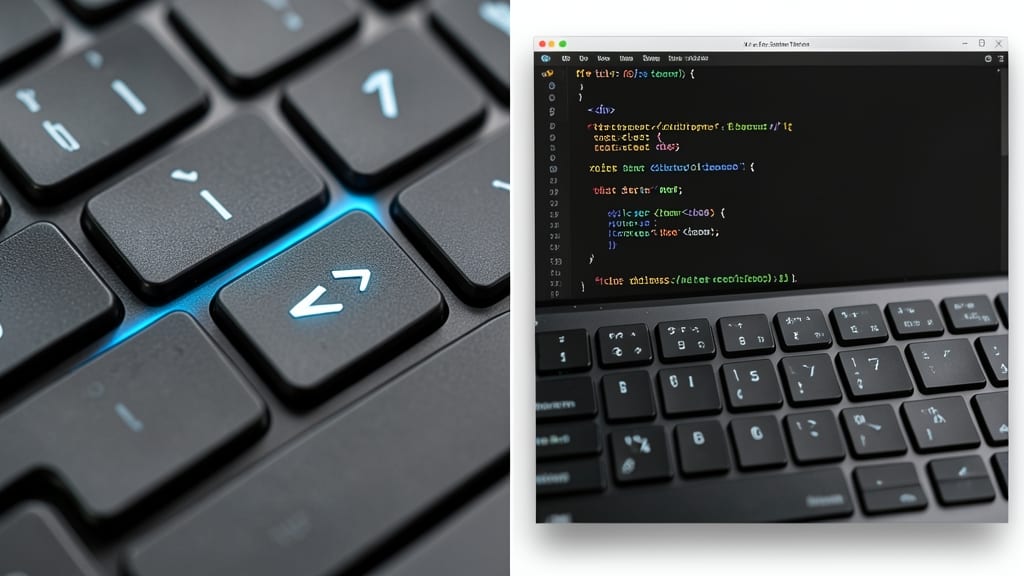
If you’ve ever spent extra seconds hunting for the right keys to type `
, Alt+60/62 is your new secret weapon. These angle brackets (<>`) aren’t just punctuation—they’re the backbone of every HTML and XML tag, and typing them directly eliminates syntax errors before they start.
Use Alt+60 for < and Alt+62 for > to insert them instantly, whether you’re writing a <meta> tag or parsing XML. Most code editors auto-highlight them, but typing them manually ensures consistency across platforms. Bonus: They’re also the gateway to self-closing tags like <img /> or <br /> in XHTML.
Frontend developers and XML specialists will save hours daily by avoiding manual bracket hunting. ⚡